



Your First Year in Computer Science at Manchester
Meet the Department Student experience Welcome to Computer Science 27th January 2026
Starting university can feel like a big step – especially in a subject as broad as Computer Science. In your first year at Manchester, you’ll build strong foundations across coding, systems, maths and data, supported by a teaching team who are there to help you learn, experiment and grow in confidence.
Here’s an overview of what the first year units look like, and the people who’ll be guiding you along the way.
COMP1: Introduction to Computer Science
This unit is a crash-course on (nearly) everything Computer Science in order to get everyone up to speed with concepts around the Linux operating system and bash commands, version control but also to introduce you to the department’s computer infrastructure. Linux skills are highly commended by employers that hire our students and we want you to get in the habit of good computing practices from the get-go.

Course Unit Leader: Dr David Petrescu
“You will probably find me at a gig.”
COMP10120: First year Team Project
This course unit is all about teamwork, communication, and active learning: in your team and with your tutor, you work on various tasks, thereby gaining valuable experience in teamwork and developing useful skills around communication, reflection, self-organisation, time management, independently acquiring new knowledge and skills, professional behaviour, project organisation, etc. The tasks teams work on include understanding ethical frameworks for computer science professionals, intellectual property issues, and the development of a web-based information system.

Course Unit Leader: Dr Stewart Blakeway
“Outside of work I enjoy cycling and programming, and I look after your SPOT page and other assessment systems. My main research focuses on adaptive Mobile Ad-Hoc Networks, and I now combine that technical background with a strong interest in computing education and improving how we teach and assess students. I’m not one for sleeping in or beach holidays – there’s too much to do in life 😊. When I do really unwind, it’s usually with trips to the Lakes, supporting Wolves FC, or tinkering with tech.”
COMP11120: Mathematical Techniques for Computer Science
Mathematics is a sister discipline to computer science and provides foundations, a language that allows us to precisely express what we mean, and techniques that are widely used in diverse areas such as machine learning, knowledge-based AI, data science, graphics, understanding algorithms and more. On this unit you learn these mathematical foundations and techniques.
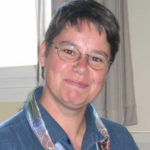
Course Unit Leader: Dr Andrea Schalk
“My big hobby is wildlife photography, which has taken me to some interesting parts of the world. When at home you’ll find me reading, following a variety of sports from the sofa, and listening to classical music.”
COMP11212: Fundamentals of Computation
The building of real-life computing systems, e.g. mobile phone, TV/video remote control, internet shopping, air-traffic control, internet banking, etc., is always a complex task. Mistakes can be not just annoying, but also costly and sometimes life threatening. Formal methods and techniques to support the building and understanding of such systems are essential. This course unit provides the basic computer science ideas underlying such methods. It introduces mathematical models that allow the description, verification, and analysis of computing systems and their limitations.

Course unit Leader: Dr Francisco Lobo
“I enjoy maintaining my Unix systems from source code; with a bit of backporting my hardware stays useable decades after the manufacturer has given up, which is great for the environment. I also have more trust in programs that I can read and customise 😉 If it’s not raining too much, you’ll find me walking or cycling around Manchester’s countryside.”
COMP12111: Fundamentals of Computer Engineering
This course introduces digital logic and its application in computer organisation and design. You will be exposed to the hardware description language System Verilog, which is used extensively by hardware designers around the world to design hardware using software. The major emphasis is on practical design work and in the practical element of the course unit you will work through the design and implementation of a working processor design in System Verilog.

Course unit leader: Dr Paul Nutter
“You will find me either with my head in a good book, watching movies, listening to music (usually vinyl), or most likely building one of my many LEGO sets (consider me an AFOL – Adult Fan of Lego).”
Paul is the Director of UG studies. Paul built the Millenium Falcon
Find out more about Paul: https://www.linkedin.com/in/pwnutter/
COMP13212: Data Science
This unit introduces how data can be analysed to extract useful information, and support decision-making. You will learn the main strategies of the data science process and gain hands-on experience using Python to clean, explore, visualise and model data. The unit also introduces uncertainty, basic statistical, machine learning concepts, and how to draw conclusions from data.
Course unit leader: Dr Ainura Begalinova
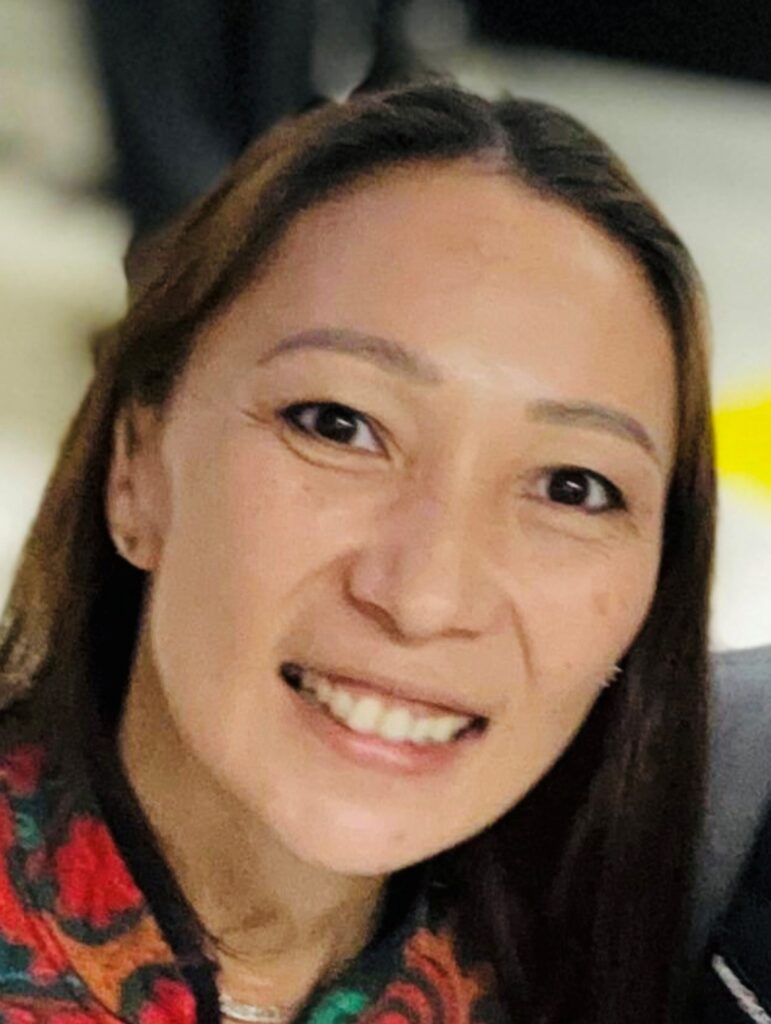
“Outside of work, I enjoy time with my family, getting outdoors for walks and hikes, going for runs, and playing the piano.”
COMP15111: Fundamentals of Computer Architecture
This unit is about making sense of computer science as a whole, bridging the divide between hardware and software. What does the hardware do when we run a program? How does the program know how to read a photo or a piece of text? What is a program to begin with?
Course Unit Leader: Dr Pavlos Petoumenos
“I enjoy hill walking and watching films, not at the same time though. 6music dad.”
Find out more about Pavlos: https://www.linkedin.com/in/ppetoumenos/
https://bsky.app/profile/ppetoumenos.bsky.social
COMP16321: Introduction to Programming 1
This course introduces the basic concepts of imperative computer programming using the Python language. The basic principles of becoming a good programmer will be taught through two lectures a week, one in a ‘TED-talk’ style and the second being a live coding session. In addition there are weekly offline workshops designed to test your logical thinking and problem solving, and finally, a weekly laboratory session giving you a chance to put all of your new skills into practice.

Course Unit Leader: Dr Gareth Henshall
“I am a keen endurance racer, taking on a 100mile run. I also love my record collection & allotment.”
COMP16412: Introduction to Programming 2
This unit continues your journey into programming. Here we consider Java, a compiled language that is used heavily by industry, in order to learn about object-oriented programming, data structures, class inheritance and a bit of algorithms.

Course Unit Leader: Dr Stian Soiland-Reyes
“I am passionate about the Web, as I remember how cool it used to be before the large corporations slurped us in. I love taking our dog for country-side walks. My kids tease me for listening to “their” pop music.”
Find out more about Stian: https://s11.no
COMP15212: Operating Systems
This course unit provides an introduction to the major principles of implementation of an operating system and some experience in how these features may be exploited by the ‘higher’ software layers.
Course Unit Leader: Prof Stephen Pettifer
“Regular gig-goer. Terrible crossfitter. Frequent videogame player.”
Find out more about Stephen: https://x.com/srp
What comes next?
First year is about more than getting through the units – it’s about building confidence, learning how to think like a computer scientist, and realising what you’re capable of. The skills you develop here form the foundation for later projects, specialisms and career pathways, but just as importantly, they help you find the areas of Computer Science that genuinely excite you.
You don’t need to have it all figured out from the start. Curiosity, commitment and a willingness to learn matter far more – and that’s exactly what first year is designed to support.
Leave a Reply